
Blood Memory
Blood Memory is a major exhibition that examines how ancestral knowledge and cultural memory continue to shape the present through contemporary art practices. The exhibition centers the work of regional artists from Native nations and Indigenous communities who consider how ancestral knowledge and lived experience are passed on across generations. Through installation, painting, sculpture, film, photography, fashion, and design, the exhibition presents inheritance as an active and sometimes unsettled process. Histories may be preserved, questioned, reclaimed, or understood anew.
The exhibition takes its title from a term developed across the writing of Kiowa author N. Scott Momaday. In his work, memory can extend beyond the limits of an individual life. It may emerge in an intuitive recognition of place, in an ancestral story felt with the force of personal memory, or through relationships sustained by language, oral tradition, imagination, and land. The artists in Blood Memory direct attention toward these forms of inheritance, and investigate how the past remains present in the body, in materials and images, and in the choices artists make now.
Featured Artists
Esteban Cabeza de Baca, Fox Maxy, Gail Werner, Gerald Clarke, Johnny Bear Contreras, Lewis deSoto, Robert Freeman, Matthew Valdivia, Sky Hopinka, Summer Herrera, Tiffany Wolfe, X, and XoQUE Art in Motion.
The exhibition includes a presentation organized by Cheryl Madrigal, Cultural Resources Manager of the Rincon Band of Luiseño Indians, drawing upon the work of the Wa$xayam Pomki Museum.
The exhibition also includes Before There Were Borders, an interactive extended reality mural by OurWorlds, presented as a digitally connected counterpart to the eponymous mural at the San Diego Central Library in downtown San Diego. Museum visitor contributions will become visible to Central Library patrons, and vice versa, creating an evolving exchange between the two sites. The project was created by OurWorlds in collaboration with members of the Cahuilla, Kumeyaay, Payómkawichum, and Kuupangaxwichem communities.
Support
Major support is provided by the Henry Luce Foundation, the Rincon Band of Luiseño Indians, and the California Center for the Arts Charitable Trust, with additional production support from George’s Camera.

José Hugo Sánchez: Amoxtlis
José Hugo Sánchez: Amoxtlis
June 6, 2026 – August 16, 2026
Opening Reception: Saturday, June 6, 2026 | 4:00 PM - 6:00 PM | Free Entry
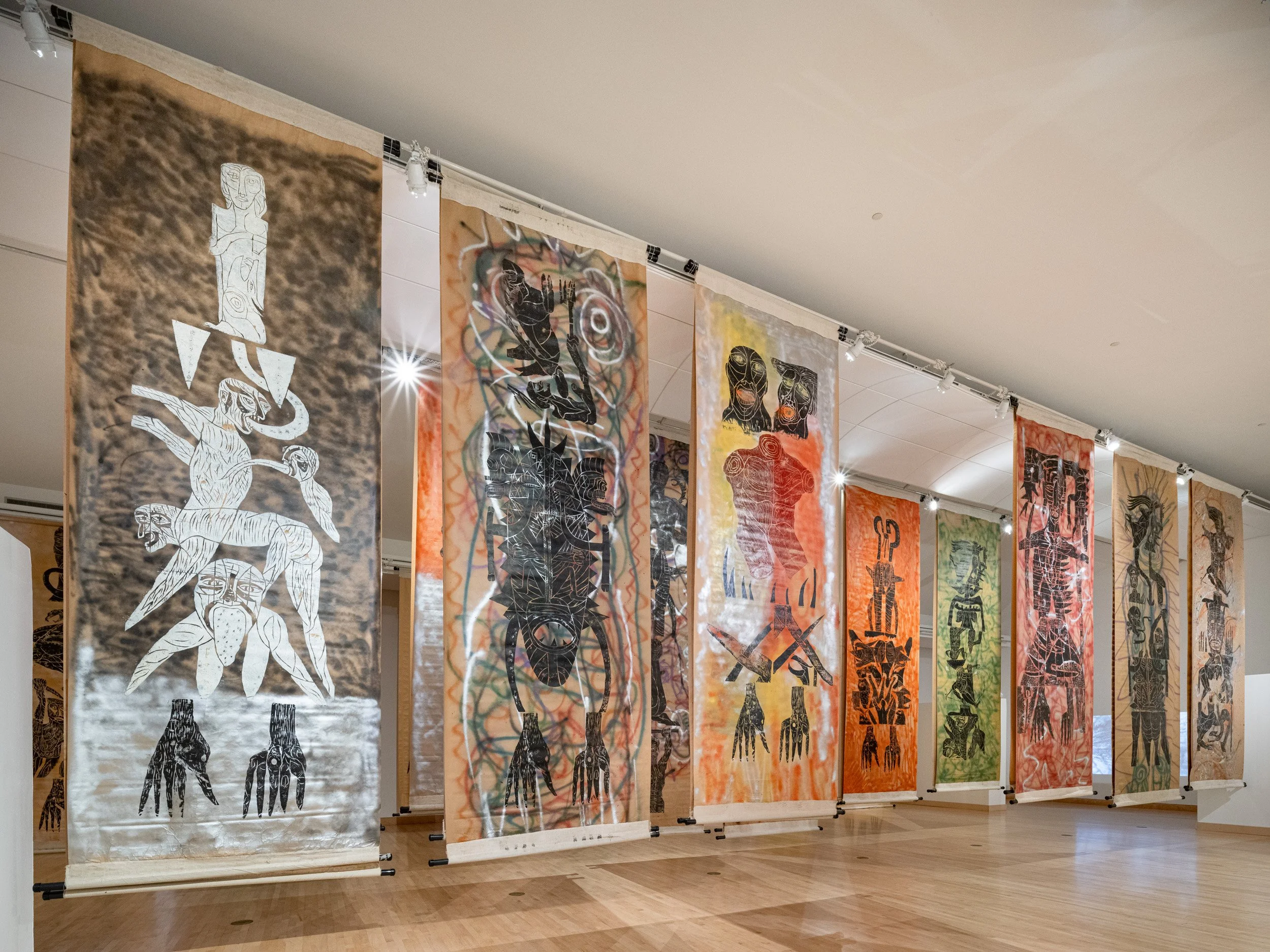
Amoxtlis—the Nahuatl word for “codices”—centers Sánchez’s large-scale printmaking practice, which draws from the visual language of Mesoamerican codices while engaging the cultural and political conditions of the U.S.–Mexico border.
At the heart of the installation is Codex Tonalpohualli, a series of towering printed banners that reference the twenty day signs of the divinatory calendar of the sun. In this calendar, time unfolds through cycles of thirteen days associated with birth and renewal. Sánchez translates this structure into an immersive environment: carved wooden codices are printed in red and black ink on monumental sheets of paper measuring sixteen feet high. Suspended from ceiling to floor, the banners surround the viewer, creating a dense vertical landscape that evokes a forest of signs and symbols.
The exhibition also includes video work, eight large-scale carved wooden sculptures, and a mural created on the gallery wall during the exhibition’s run. These elements extend Sánchez’s exploration of narrative image-making across multiple forms, from print and sculpture to moving image and architectural intervention. Throughout the installation, references to popular culture intersect with mythic imagery and historical forms of knowledge transmission.
Sánchez describes his work as “pop-multiculture,” a hybrid language shaped by the movement of people, images, and ideas across borders. Working across printmaking, sculpture, drawing, performance, and graphic design, he brings together references from pre-Columbian codices, contemporary Chicano visual culture, and mass media. His imagery reflects the layered histories that connect Mexico and the United States, while addressing the political and human realities that define the border today.
Field Notes on Memory
Field Notes on Memory
June 6 – August 16, 2026
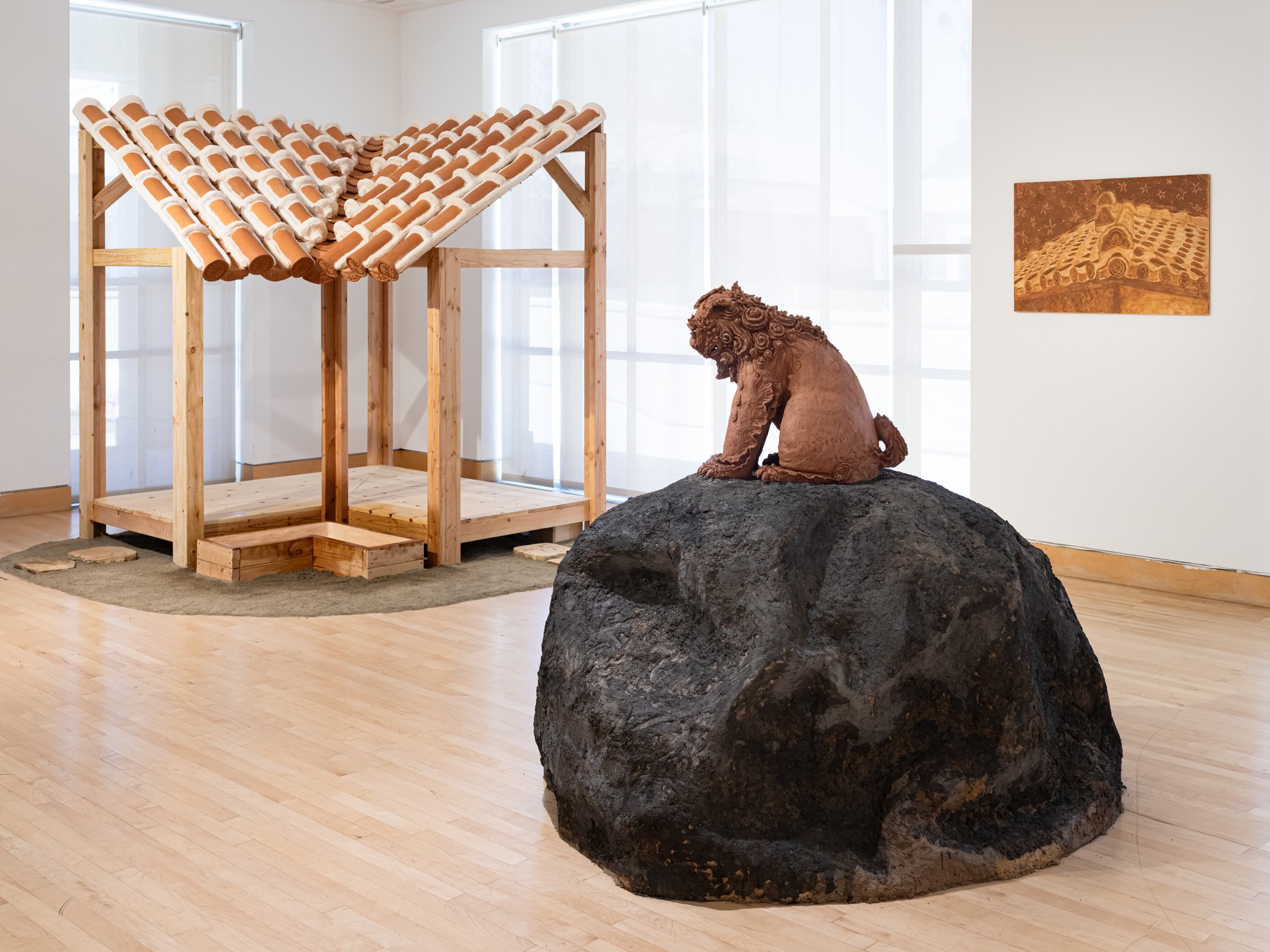
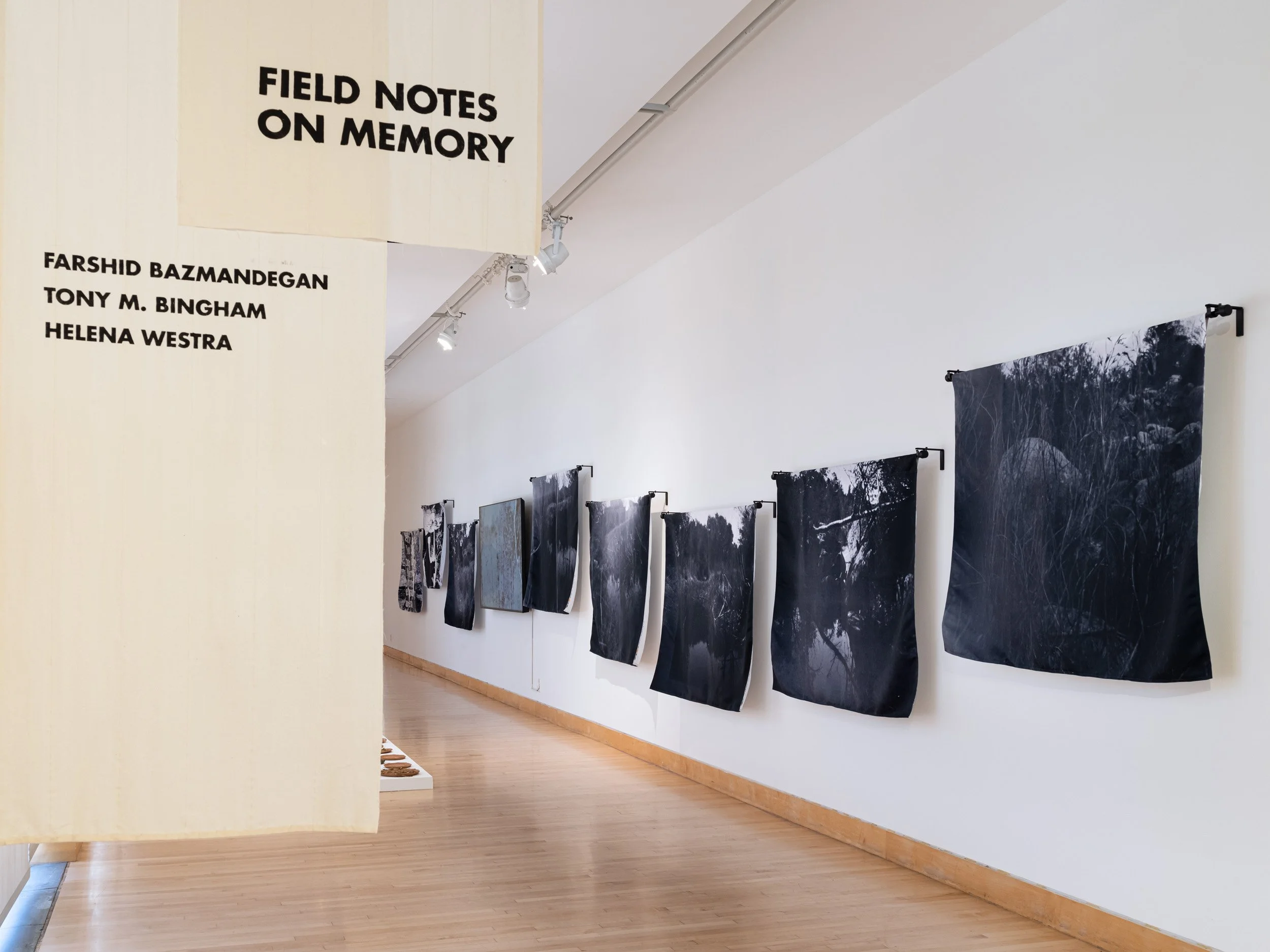
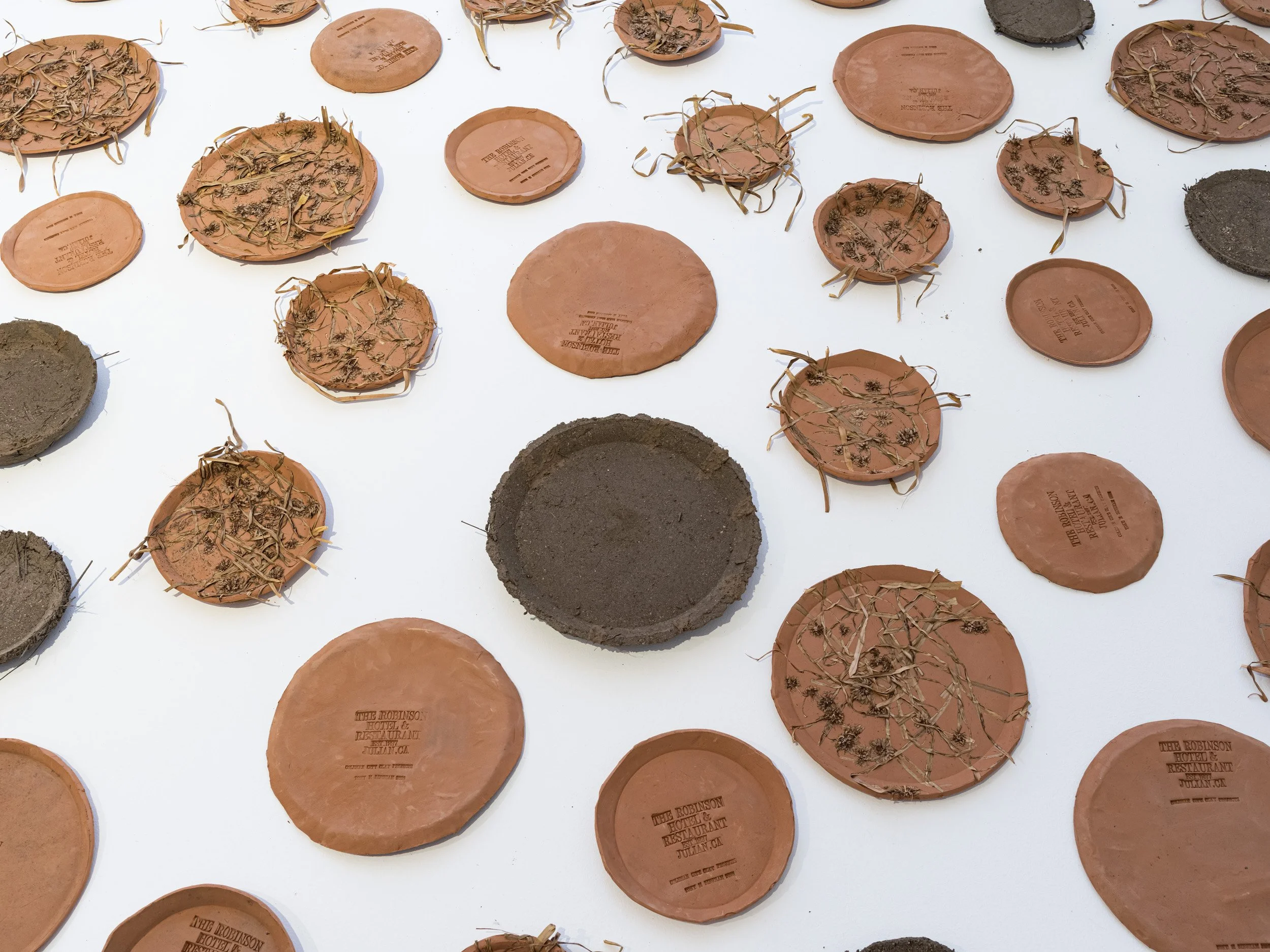
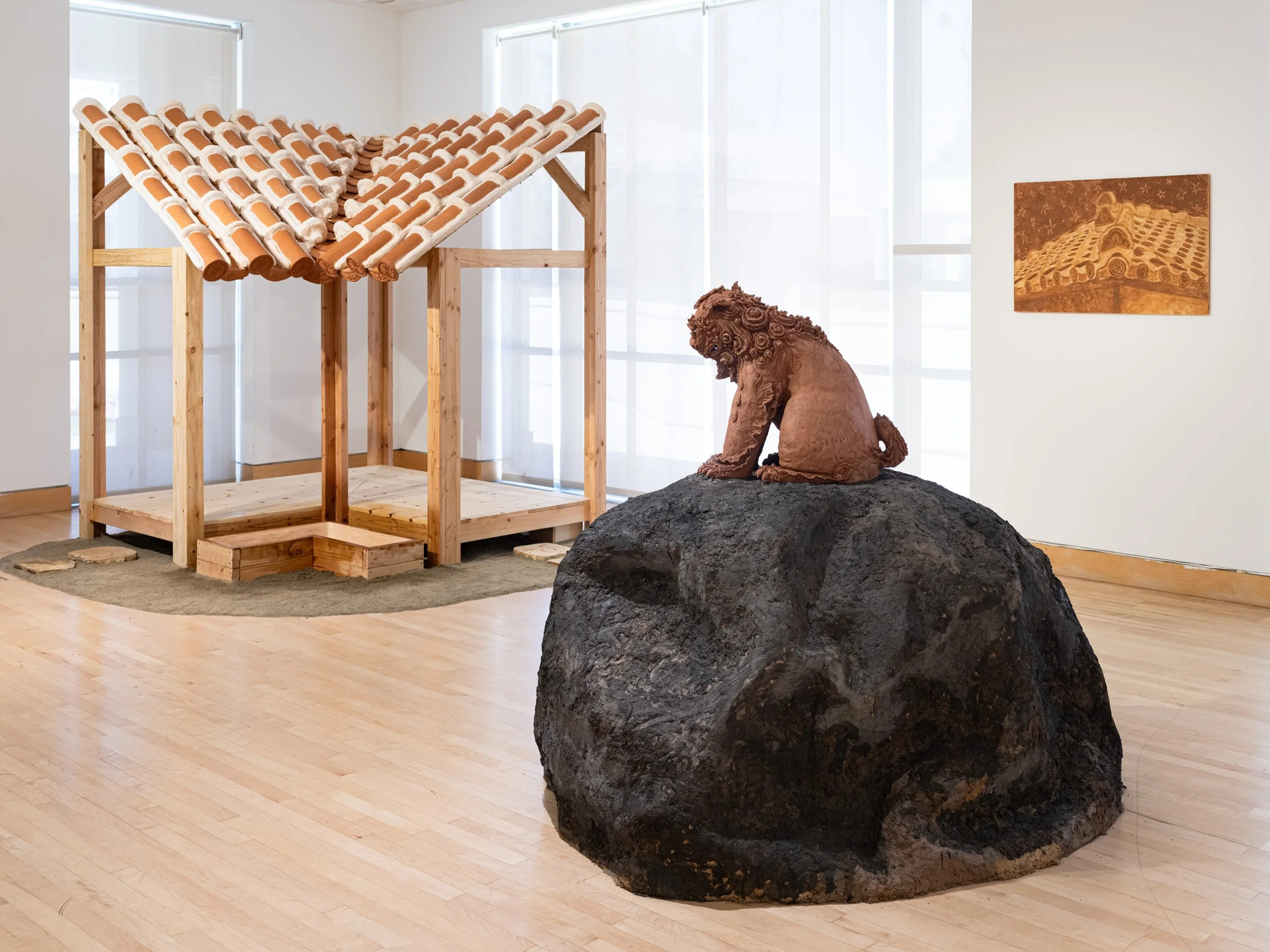
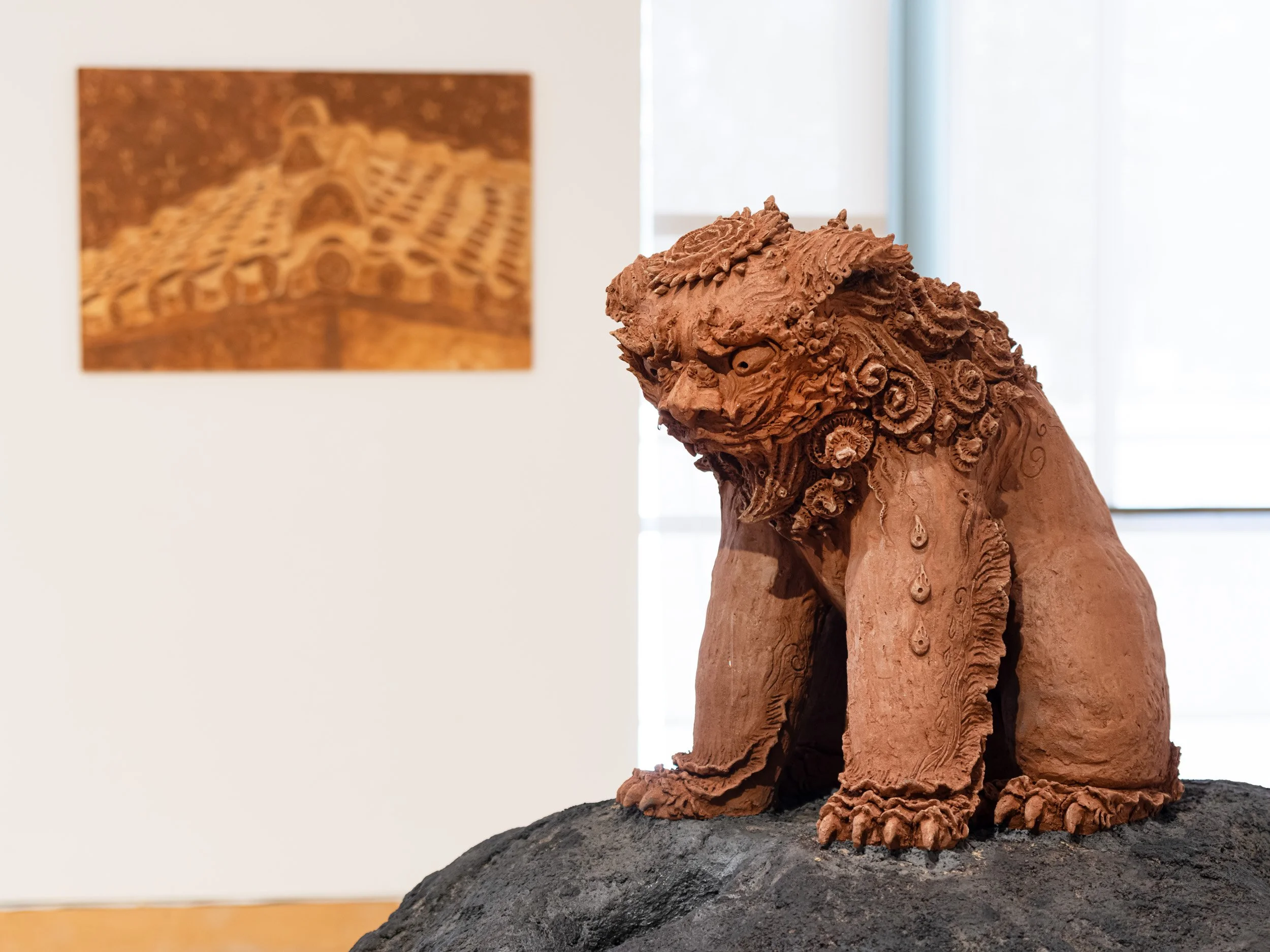
Field Notes on Memory brings together the work of 2025–26 Artists-in-Residence Farshid Bazmandegan, Tony M. Bingham, and Helena Westra in an exhibition exploring memory, land, and its histories through installation, sculpture, photography, and sound.
Developed through the Museum’s In Studio Artist Residency program, the exhibition approaches landscape as a site where memory takes shape through earth, architecture, domestic objects, sound, and archival research. The artists draw from family histories, overlooked narratives, ancestral practices, and experiences of migration and exile, creating environments where personal memory and collective history remain closely intertwined.
Farshid Bazmandegan’s installation reflects on displacement and collective mourning through sculptural forms, video, and references to Persian cultural traditions informed by memories of Iran. Tony M. Bingham’s work traces overlooked African American histories at the start of the Gold Rush in Julian, California, through pinhole photography, sound, found materials, and sculptural installations informed by local archives and oral histories. Working with clay, soil, and natural materials, Helena Westra draws from ancestral craft traditions and family histories connected to Okinawa.

Light Among Shadows: The Night of the Dead in Pátzcuaro, Michoacán
Light Among Shadows: The Night of the Dead in Pátzcuaro, Michoacán
Organized by photographers Salvador Angel Solórzano Barrera and David López Ortiz

Opening reception: Friday, October 24, 2025, 5:00 PM - 8:00 PM | Free Entry
On view: October 24 - November 2, 2025
In Mexican tradition, death does not represent an end, but a transition, a continuity that connects generations through remembrance and celebration. This photography exhibition invites us to immerse ourselves in one of Mexico's most profoundly spiritual rituals: the Night of the Dead, as experienced in the region of Pátzcuaro, Michoacán.
Through over 20 images captured with sensitivity and respect, this exhibition reveals the ritual beauty of a night where the light of candles guides souls and the fragrance of cempasúchil traces invisible paths between the living and the dead. The photographs, taken in communities such as Janitzio, Tzintzuntzan, Ihuatzio, and Santa Fe de la Laguna, document not only the visual elements of the tradition but also the collective soul of those who keep it alive.
Generous support for this exhibition is provided by Bordando Nuestras Raíces.